
Butchers Twine On Grill – The Art Of Using Butcher’s Twine
Butchers Twine On Grill – Cooking twine, commonly referred to as kitchen twine or butcher twine, is a useful and important equipment. Butchers and chefs have been using this sturdy cotton rope for generations. Due to its durability, the twine is perfect for tying and trussing a variety of meals, ensuring that they keep their form while cooking. Although it was first used by butchers to prepare meat, its uses now include all grilled dishes, including meats, vegetables, and seafood.
Moreover, grilling is a well-liked cooking technique that gives meals great smokey tastes and lovely grill marks. Grilling, often presents difficulties, especially when working with delicate or oddly shaped foods. Inadequate fastening might cause fish to disintegrate, vegetables to fall through the grates, and meats to lose their shape, all of which lead to uneven cooking and a less satisfying eating would experience. The use of butcher’s twine by cooks on the grill has a number of advantages. The capacity of the twine to bind and stabilize different materials makes sure that heat is distributed evenly, lowers the chance of charring, and aids in maintaining a uniform cooking process. Butcher’s twine also makes food seem better presented, which appeals to visitors’ sense of aesthetics.
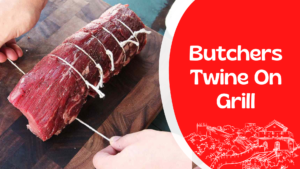
This article’s main goal is to examine the benefits of using butchers twine in grilling methods. Readers will learn how to improve their cooking twine skills and get excellent outcomes by looking into the different applications and advantages of this kitchen necessity.
Table of Contents
What is Butchers Twine?
A useful and long-lasting kitchen utensil for preparing and cooking meals is butcher’s twine. Although some contemporary varieties may include additional materials like polyester or a combination of natural and synthetic fibers, this sort of string is usually constructed from just cotton. Although some firms may provide coloured variations, the twine is normally unbleached and has a natural off-white or light brown tint. Butcher’s twine is renowned for its durability and thickness, which make it perfect for use in a variety of kitchen tasks, particularly for fastening and tying food products. Especially when exposed to heat on the grill, its tight, solid construction enables it to retain food firmly throughout cooking and preserve the form and structure of contents.
Butcher’s Twine varieties
1# Regular Butcher’s Twine:
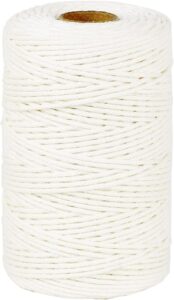
This kind of butcher’s twine is the most popular and widely used. It is perfect for trussing, tying, and fastening a range of meals since it is sturdy and long-lasting.
[su_button url=”https://amzn.to/45yibmc” target=”blank” rel=”nofollow noopener noreferrer” background=”#2a6bb4″ size=”5″ wide=”yes” center=”yes” icon=”icon: amazon”]Buy Now On Amazon[/su_button]
[su_divider divider_color=”#cd691b” link_color=”#cd691b”]
2# Cooking Twine with Integrated Dispenser:

Some butcher’s twine products have an easy-to-use integrated dispenser that makes it simple to cut the twine to the required length without the need of scissors or an additional twine holder.
[su_button url=”https://amzn.to/44uWbY3″ target=”blank” rel=”nofollow noopener noreferrer” background=”#2a6bb4″ size=”5″ wide=”yes” center=”yes” icon=”icon: amazon”]Buy Now On Amazon[/su_button]
[su_divider divider_color=”#cd691b” link_color=”#cd691b”]
3# Butcher’s Twine Cones:
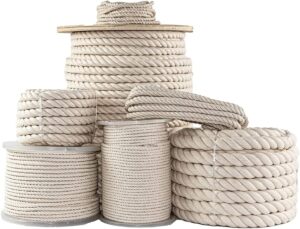
Twine cones are bigger spools of twine that are ideal for chefs in professional kitchens or for anyone who routinely uses greater amounts of twine there.
[su_button url=”https://amzn.to/45IDbGo” target=”blank” rel=”nofollow noopener noreferrer” background=”#2a6bb4″ size=”5″ wide=”yes” center=”yes” icon=”icon: amazon”]Buy Now On Amazon[/su_button]
[su_divider divider_color=”#cd691b” link_color=”#cd691b”]
Heat Resistance and Material
When used on the grill or in the oven, traditional butcher’s twine made of 100% cotton has exceptional heat resistance. Cotton twine is safe and effective since it can endure the temperatures often seen while cooking without melting or burning. Butcher’s twine may sometimes be produced from other materials, such as polyester or a mix of cotton and synthetic fibers. Even if some variants can still withstand heat, it is important to read the manufacturer’s instructions to be sure they are suitable for use in the grill or oven.
Common Cooking Uses for Butcher’s Twine
- To guarantee consistent cooking and retain a compact shape, poultry trussing involves binding the wings and legs of poultry, such as chicken or turkey, tightly to the body.
- To keep roasts, rolled meats, and other big pieces from coming apart or unraveling while cooking, butcher’s string is employed.
- When stuffing meats like pork loin or beef tenderloin, twine is used to hold the filling in place and produce a regular shape.
- The appearance of vegetables and seafood may be improved by bundling them with butcher’s rope to make them simpler to manage on the grill.
- Twine may be used to keep the bacon in place when grilling when it is wrapped around meats or veggies.
- Butcher’s twine is sometimes used in sous vide cooking to bind together components that have been vacuum-sealed so that they cook uniformly in the water bath.
- In conclusion, butcher’s twine is a crucial culinary tool, particularly for grilling fans. Its robust design, heat resistance, and adaptability make it an essential tool for fastening and tying different items, increasing the look and flavor of grilled foods.
How the Pros Use Butcher’s Twine | Grilling Tip
1# Improved Shape Retention and Presentation
The ability to improve the appearance and form retention of grilled items is one of the key benefits of utilizing butcher’s twine on the grill. Trussing with twine during the grilling process helps meats, particularly entire fowl or wrapped roasts, keep a consistent shape throughout the cooking process. This makes serving and cutting simpler as well as ensures a visually beautiful presentation, enabling a more formal and elegant presentation at the dinner table.
2# Heating and Cooking Evenness
In certain cases, grilling may result in inconsistent cooking, particularly when working with big or oddly shaped chunks of meat. By carefully holding the food, the butcher’s rope helps ensure equal cooking and heat dispersion. It is less likely that certain portions of the dish will be overcooked while others will be undercooked by trussing or tying meats and other items. As a consequence, the whole dish cooks more uniformly, producing grilled delights that are juicier, tenderer, and cooked to perfection.
3# Keeping Food from Decomposing
Ingredients that are delicate or loosely packed, such as stuffed meats or vegetable bundles, are more likely to come apart on the grill. Butcher’s twine gives these items the support and solidity they need to stay together while cooking. As a barrier, the string keeps the filling within and keeps the veggies or shellfish from falling apart when grilling. This not only preserves the food’s structural integrity but also averts waste and possible mess, making grilling more pleasant.
4# Rotating and Flipping Simplified
To ensure equal cooking on all sides while grilling different meals, it is crucial to rotate and turn them. Without the right equipment, handling hot, greasy, or sensitive things may be difficult. Butcher’s twine turns out to be a helpful tool in this situation. The chance of accidental drops or breakage is reduced by twine-securing the food, making it simpler to manage and rotate on the grill. Because of this ease, grilling is more effective and the chef can concentrate on getting the dish just right without worrying about the food breaking apart.
In conclusion, utilizing butcher’s twine on the grill has a lot of benefits that are very helpful in making grilling a success. Butcher’s twine is a useful and essential tool for any grill lover, helping to improve the appearance and form retention of the meal as well as guaranteeing even cooking, heat dispersion, and keeping components from crumbling. Its ease of use and efficacy make it a crucial addition to the grilling toolset, enabling cooks to easily produce mouthwatering and aesthetically spectacular grilled foods.
Butchers Twine on Grill
How to Choose Butcher’s Twine?
To achieve the best performance and safety while selecting butcher’s twine for grilling, various criteria should be taken into account:
- Because it is constructed entirely of cotton, traditional butcher’s twine has great heat resistance and food-safe qualities. A combination of natural and synthetic fibers or other materials, such as polyester, may be used in certain versions. Make sure the grilling and cooking-safe label is on the twine.
- Consider the twine’s thickness since it has an impact on its strength and ability to tie knots. While smaller thread may be used for delicate things or more complex knotting, thicker string can be more suited for trussing bigger portions of meat.
- Choose a string length that can fit the range of sizes of the foods you usually grill. To get the best culinary results, you must have enough rope to safely tie and truss a variety of meals.
- Make sure the butcher’s twine is marked as “food-grade,” which denotes that it is suitable for direct contact with food and without any dangerous chemicals or coatings.
Tensile Strength and Weight Capacity
- Different weight capacities and tensile strengths are available for butcher’s twine, indicating the greatest load it can support without breaking or stretching too much. It is essential to choose twine for grilling that is strong enough to withstand the weight of the food being grilled.
- To guarantee effective trussing and fastening, large roasts or entire fowl, for instance, call for twine with a larger weight capability.
- On the box or label for the twine, manufacturers often provide weight capacity information. If you’re unsure, use twine with a larger weight capacity to be sure it can withstand various grilling applications.
When utilizing butcher’s twine for grilling, it’s essential to have solid knot-tying skills. A properly made knot minimizes the chance that the twine will unravel or come undone while the meal is cooking by holding the food tightly together.
Before making a purchase, evaluate the twine’s ability to tie knots by examining its texture and thickness. For grilling applications, twine that maintains knots firmly without sliding or loosening is perfect.
Relationship to Different Foods
- From delicate veggies to robust chunks of meat, different grilling recipes call for different kinds of cuisine. Make sure the butcher’s twine you use is suitable for a variety of typically grilled foods.
- Thicker twine could be preferable for delicate vegetables and smaller slices of meat in order to preserve the texture. To manage the weight and successfully bind bigger roasts and entire birds, thicker and stronger threads will be required.
In conclusion, selecting the appropriate butcher’s twine for grilling is crucial to ensuring safety, use, and the best possible cooking outcomes. To choose twine that satisfies the requirements of different grilling applications and improves your entire grilling experience, take into account criteria like material, thickness, length, food-grade quality, weight capacity, tensile strength, and knot-tying ability.
Choosing the Right Meat Cuts
It’s crucial to choose the appropriate pieces of meat that benefit from trussing or tying when grilling using butcher’s twine. Trussing is most suited for larger chunks of meat, such as entire fowl, game birds, roasts, and rolled meats. The string assists in keeping their form when grilling, encourages consistent cooking, and stops the meat from drying out. To guarantee an equal cooking procedure, use slices that have extra skin or flaps that need to be fastened.
Techniques for Tying and Trussing
Use these steps to truss poultry or game birds:
- The bird should be rinsed and dried with paper towels.
- To keep the bird’s wings from burning while it is being grilled, tuck them behind its back.
- Butcher’s twine should be used to cross the legs at the ankles and secure them together tightly against the torso.
- To keep the form, carefully secure the twine as you wrap it around the bird’s body.
Combining Rolled meats and Roasts
Use the next procedure for roasts and rolled meats:
- The meat should be placed on a fresh surface and seasoned to taste.
- If the meat is rolled, unfold it and distribute the filling evenly.
- Returning the meat to its natural form, tie it with butcher’s twine along its length at regular intervals.
- Because the meat may expand during cooking, make sure the twine is secure but not too tight.
Keeping Seafood and Vegetable Bundles Safe
Use twine to bind seafood or vegetable bundles before grilling:
- Make a tidy bundle out of the fish or veggies, packing the items securely.
- The bundle should be tightly bound with the butcher’s twine to keep the contents in place.
How to Safely Use Butcher’s Twine on the Grill
1# Steer clear of toxic twine
Make sure the butcher’s twine being used for grilling is marked as food-grade and oven-safe. Use of common household twine or thread should be avoided since it can contain dangerous coatings or chemicals that might seep into the food while being grilled. Use only cotton thread or other materials that are safe for consumption.
2# Protecting Twine from Flames
Keep the butcher’s twine away from the grill’s open flames while using it. High heat may cause cotton or other natural fiber twine to char or burn, which can alter the flavor of the dish or provide a fire risk. Use indirect heat cooking techniques or keep the string away from the grill’s edges where flames could lick the surface.
3# Maintaining Control of Temperature and Proper Food Handling
While butcher’s string helps hold food in place for consistent cooking, it’s crucial to use correct food handling and temperature management techniques while grilling. To guarantee that meats reach the correct internal temperature for eating, use a food thermometer. Avoid leaving food on the grill for long periods of time since overcooking may produce harsh, dry results. Before serving the dish, remove the string to reduce the chance that someone would accidentally eat it.
You may successfully prepare food for butcher’s string application and properly utilize the twine on the grill according to these instructions, resulting in scrumptious grilled foods with ideal presentation and flavor.
Trussing A Roast | Tips & Techniques
1# Whole Turkey or Chicken
A complete chicken or turkey may be trussed to ensure consistent cooking and shape preservation when grilling.
Step 1: Thoroughly rinse and dry the bird.
Step 2: Is to fold the bird’s wings behind its back. Cross your legs at the ankles in step three.
Step 3: To firmly fasten the legs together, take a long piece of butcher’s twine and loop it under the legs before pulling it up and around them.
Step 4: Tightly, but not too tightly, wrap the string around the bird’s body. Double-knot the twine and cut off any extra.
Roast Beef Tenderloin
A beef tenderloin roast is better kept cylindrical by being tied, which also facilitates uniform cooking.
Step 1: Use paper towels to pat the beef tenderloin dry. To make a cylinder that is uniformly thick, tuck the roast’s thin tail end down if necessary.
Step 2: Wrap the roast with butcher’s twine at regular intervals, beginning at one end. To keep the form of the roast, make sure the twine is snug but not too tight.
Step 3: Trim any extra rope once the roast has been evenly secured.
Fish packages
Butcher’s twine is used to secure seafood packets, keeping the components contained and preventing them from disintegrating while being grilled.
Step 1.Prepare the seafood of your choosing, such as fish fillets, shrimp, or scallops.
Step 2: Arrange the seafood on a piece of parchment paper or aluminum foil.
Step 3: Stuff the package with spices, herbs, and any preferred veggies or butter.
Step 4: To create a secure bundle, fold the foil or parchment paper over the fish.
Step 5: Seal the packet by wrapping butcher’s string over the top to keep it closed while cooking.
The seafood bundle is now ready for the grill after Step 6: Trim any extra thread.
You can easily truss and knot a variety of items to make sure they stay safe and appealing when grilling by following these detailed instructions. For your next outdoor grilling session, you may use these strategies to produce nicely grilled foods that are also aesthetically pleasing.
Grilling with Butcher’s Twine: Tips & Tricks
1# Pre-Grilling Soak for Twine
When grilling at a high heat or for a lengthy amount of time, it might be helpful to soak butcher’s twine in water before using it. When exposed to direct flames, wet twine is less likely to burn or catch fire, lowering the possibility of contaminating the food with unfavorable odors. Before using the twine for trussing or tying, just soak it for a little while in a basin of water of the necessary length.
2# How to tie knots perfectly
When using butcher’s twine on the grill, it’s important to tie knots that are strong and sturdy. To tie the best knots:
- Make sure the string is securely coiled around the meal.
- Cross the twine’s ends and wrap one end under and through the other for a simple knot.
- To tie the knot, tightly pull on both ends. If necessary, repeat to make sure the knot is strong.
- You may add extra loops or utilize certain knotting methods, such the butcher’s knot or the slip knot, which provide even more rigidity, for bigger or more complicated cuts.
3# When to Cut the Twine Off
Before serving, the food must be free of the butcher’s string. Use kitchen shears or a knife to gently cut and remove the twine once the dish has been prepared and is ready to be served. Removing the string makes it possible for visitors to enjoy the grilled food without risk of inadvertent eating.
4# Butcher’s Twine Reuse
Depending on how well it is maintained, butcher’s twine may often be used for numerous grilling sessions. Examine the rope for any evidence of charring, fraying, or deterioration after use. The twine may be cleaned, dried, and saved for later use if it seems to be in good condition. For the following grilling session, it is better to use new twine if the old one exhibits any symptoms of deterioration or breakage.
How to Care for and Store Butcher’s Twine
Properly Washing and Drying Twine
Following these methods will make it easy to clean butcher’s twine:
- To get rid of any visible dirt or food particles, thoroughly rinse the string under cold running water.
- Put the twine in a basin or sink filled with warm, soapy water, and let it soak for a while.
- To get rid of any remaining particles, gently stir the twine in the soapy water.
- To get rid of the soap, thoroughly rinse the string under cold running water.
- Squeeze the string to remove any extra water.
- Lay the twine flat on a fresh towel and let it thoroughly air dry. Avoid using high heat techniques that could harm the twine, such as microwaving or using a dryer.
Considerations for Long-Term Storage
Butcher’s twine should be kept dry and disinfected and kept out of direct sunshine. The twine may be stored in its original packaging, a plastic bag that can be sealed, or a compact container. It will be easier to prolong the twine’s usefulness if you keep it dry and protect it from moisture.
You can get the most out of your butcher’s twine during grilling sessions by using these suggestions and techniques. These tips will improve your grilling experience and allow you to produce delicious foods with the aid of this adaptable kitchen need, from guaranteeing safe and effective usage to establishing tight knots and extending the twine’s life via correct cleaning and storing.
Conclusion
In conclusion, adding butcher’s twine to your grilling endeavors may greatly improve both your cooking abilities and the quality of your grilled foods. You can maximize the uses of this multipurpose cooking gadget on the grill by being aware of its features and advantages. The strength and heat resistance of butcher’s twine provide a number of benefits, such as better presentation, form preservation, even cooking, and less food crumbling. You may guarantee that different components cook uniformly and keep their integrity throughout the grilling process by fastening and tying them using twine. When selecting butcher’s twine, take into account things like the material, weight capacity, knot-tying ability, and food compatibility. By choosing the right twine, you can be confident that it can withstand the rigors of tying and trussing a variety of meat, vegetable, and seafood pieces.
When preparing meals for butcher’s twine application, use the right pieces of meat and use the proper trussing and tying methods for the ingredients. Your grilled masterpieces will be more elegant and useful if you truss entire chickens or turkeys, tie filled pig loins or beef tenderloin roasts, secure vegetable bundles, and make seafood packages. To properly grill using butcher’s twine, avoid using poisonous string, keep it away from flames, and make sure to handle food carefully and maintain the right temperature. You may take use of the advantages of utilizing twine without taking any dangers if you follow safety precautions. It takes practice to master the art of grilling with butcher’s twine, but there are some useful hints and techniques you can use, such soaking the twine before grilling, making tight knots, knowing when to take the string off before serving, and recycling twine while it’s still in excellent shape.
Last but not least, butcher’s twine has to be maintained and stored properly to retain its usefulness. The twine will stay prepared for your next grilling excursions if you properly clean, let it to air dry after use, and store it in a cold, dry location. By using butcher’s twine into your grilling arsenal, you can produce mouthwatering foods that are both aesthetically appealing and impressive to your family and friends. Any grill fan needs this straightforward cooking gadget because of its adaptability, usefulness, and ease. You may open up a world of possibilities and take your grilling to new levels of culinary mastery by using the power of butcher’s twine on the grill.


